
Strong macroeconomic headwinds causing turbulence in the $245-billion Indian IT industry are yet to calm down. Top Indian IT services companies are likely to post a decline or just marginal growth in sequential revenue in Q1FY24 because of a soft discretionary spending environment. Though the first quarter is seasonally strong for IT firms, "June 2023 will be an exception", according to analysts at Kotak Institutional Equities.

Amazon Web Services (AWS) will invest nearly $4.4 billion (Rs 36,000 crore) in India by 2030 and support more than 48,000 jobs externally through a new regional service launched on Tuesday, said the on-demand Cloud computing company. AWS Asia Pacific (Hyderabad) is the company's second infrastructure region in India, six years after it opened its first Cloud region in Mumbai in 2016. The Hyderabad region will give customers access to AWS technologies for data analytics, security, machine learning, and artificial intelligence.

Tech giant IBM on Tuesday said it has received 9,130 US patents in 2020 - topping the US Patent List for the 28th consecutive year - with India being the second-highest contributor. "IBM scientists and researchers received 9,130 US patents in 2020, the most of any company, marking 28 consecutive years of IBM patent leadership. "IBM led the industry in the number of artificial intelligence (AI), cloud, quantum computing and security-related patents granted," IBM said in a statement. For the fourth year in a row, IBM India was the second highest contributor to IBM's global tally with 930 patents granted to inventors from India in 2020.

Henry Kissinger once said, 'It may be dangerous to be America's enemy, but to be America's friend is fatal.' India will have to wait and see, observes Rajeev Srinivasan.

Citing India's commitment to deep economic reforms and ease of doing business, Prime Minister Narendra Modi asserted on Monday that this is the best time to invest in the country as policy-making is focussed on the needs for the next 25 years for a 'clean and green' as well as 'sustainable and reliable' growth period. In his special address to the World Economic Forum's online Davos Agenda 2022 summit, Modi underlined a host of reform measures undertaken by his government to stress that it has worked to reduce the administration's interference in business by deregulating many sectors and to clear the way for free trade agreements with different countries. India was once associated with "license raaj", he noted and highlighted the measures, including reduction of corporate tax to boost business and doing away with over 25,000 compliance requirements.

Ahead of the Union Budget for 2023-24, Budget makers have welcomed the global consensus view that India will remain one of the bright spots in calendar year 2023. But there is some alarm over the grim global situation and how that might impact the Centre's projections and assessments for next financial year. The big global headwinds include a deep and sustained recession in the West, including India's biggest trading partners in North America and Europe, continuing volatility in commodity markets, and renewed Covid-19 fears, as lifting of strict curbs by China could potentially lead to a massive spread again.

Replying to a question on the recent spate of protests and riots, Coca-Cola's Global Chairman and Chief Executive Officer James Quincey said, "If there are disruptions in the functioning of a society, there will be some degree of problems for all businesses." "India is a vibrant democracy and it needs to work out what is going on. It is hoped that things get worked out in an appropriate democratic manner," he added.

'The markets have corrected almost 8-9 per cent from their highs, so one can accumulate quality stocks at reasonable prices.'
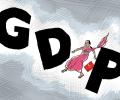
India's Gross Domestic Product (GDP) is expected to expand by 9.2 per cent in the current financial year, according to the Economic Survey 2021-22 tabled in the parliament on Monday. "Advance estimates suggest that the Indian economy is expected to witness real GDP expansion of 9.2 per cent in 2021-22 after contracting in 2020-21. "This implies that overall economic activity has recovered past the pre-pandemic levels," Economic Survey noted. Almost all indicators show that the economic impact of the "second wave" in Q1 was much smaller than that experienced during the full lockdown phase in 2020-21 even though the health impact was more severe, it said.

Modi thanked his Australian counterpart for supporting him in unveiling the foundation stone of 'Little India', a suburb of Sydney.

The United States-China Summit meeting concluded at a sprawling mansion in Woodside, California with Presidents Joe Biden and Xi Jinping agreeing to work towards ensuring that the differences between the two countries remain manageable and the relations do not derail.
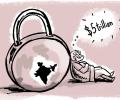
India is much better placed today to deal with future waves of the pandemic relative to the first wave, RBI deputy governor Michael Patra said.

Rating agencies Crisil and Icra on Monday revised down their India growth projections for the current fiscal and the second quarter mainly due to the ripple effect of slowdown in global growth and mixed crop output. Crisil downgraded the India growth forecast by 30 bps to 7 per cent while Icra pegged the economic expansion at 6.5 per cent for the second quarter of FY2022-23. "We have revised down our forecast for real gross domestic product growth to 7 per cent for fiscal 2023 from 7.3 per cent, primarily because of the slowdown in global growth that has started to impact our exports and industrial activity.

A vast majority of borrowers are in the essential services' supply chain with tiny and micro businesses, and this has sprung back.

In spite of a severe second wave of the coronavirus pandemic, and a widespread disruption in public life therefore, India's fast-moving consumer goods (FMGC) sector seems to have emerged as one of the most resilient segments of the economy. The early numbers and estimates for the April-June quarter indicate a steady recovery in FMCG players' business, which is now set to exceed the pre-pandemic level. Amid nationwide lockdowns because of the first Covid wave, FMCG revenues had been severely affected in mid-2020.

After recording positive growth in September, India's exports declined 5.4 per cent to $24.82 billion in October on account of dip in shipments of petroleum products, gems and jewellery, leather, and engineering goods. Trade deficit in October narrowed to $8.78 billion as against $11.76 billion, as imports also fell 11.56 per cent to $33.6 billion during the month under review.

Tata Consultancy Services (TCS) has weathered the pandemic very well, and has earned tremendous goodwill from customers, which enhanced the firm's standing in the market, N Chandrasekaran, chairman, said in his virtual address of the 26th Annual General Meeting on Thursday. He said TCS shareholders received over 3,000 per cent return on their investments since the company was listed in 2004.

The additional outgo to combat the impact of COVID-19 will significantly erode the fiscal consolidation achieved by the state governments in the past three years, an RBI report said on Tuesday. In its study of the state budgets of 2020-21, the RBI report which has dwelled on the theme 'COVID-19 and its Spatial Dimensions in India', said that Gross Fiscal Deficit (GFD) of the states would spiral during the current fiscal.

Hotel companies, which have experienced substantial share price gains in the past six months, are not only expected to post robust revenue growth in the seasonally weak July-September quarter (second quarter, or Q2) of 2023-24 (FY24), with the trend continuing in the second half (H2) of FY24, but according to some analysts, they will also benefit from a structural uptrend in progress. To begin with, larger players in the listed hotel sector are expected to report strong growth in Q2 compared to the year-ago quarter. Led by higher demand from the business segment, the sector is expected to achieve a growth rate of 15-30 per cent.

'The prospect is of a self-confident and self-sustaining India will make it a more effective player in the global arena,' External Affairs Minister Dr Subrahmanyam Jaishankar points out delivering the Sardar Patel Lecture-2020: India and the Post-Covid World.

You finally end up with an army of midgets led by midgets, notes Sandeep Goyal.

Asia's richest man Gautam Adani, besides looking at opportunities to expand his vast empire, is hooked on ChatGPT - the programme that trawls vast amount of information to generate natural-sounding text on virtually anything - from crafting jokes to writing ad copy, debugging computer code, to even generating poems and essays. Adani, whose conglomerate has in recent years diversified from mines, ports and power plants into airports, data centres and defence, penned musing from his visit to Davos to attend the World Economic Forum meeting. "From a meetings perspective, this was perhaps my busiest WEF as I met over a dozen heads of states and several business leaders," he wrote on LinkedIn, talking of new geopolitical couplings, climate change and tight-lipped evangelists and AI.

India, with the right blend of the physical and the virtual, can emerge as the global nerve centre of complex modern multinational supply chains in the post COVID-19 world.

Here's the full text of Prime Minister Narendra Modi's address to a joint session of the United States Congress, delivered on Thursday.

The agency welcomed the Rs 1.70-lakh crore package announced by Finance Minister Nirmala Sitharaman earlier in the day but said more measures like loan forbearances for small businesses and households are necessary.
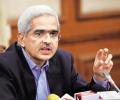
Softening inflation, Das said would make available more policy space to the central bank to address risks to the growth going forward.

China remains the elephant in the room and has to be tamed, which the United States alone is unable to do and therefore calls allies to come on board.

Passenger vehicle market leaders Maruti Suzuki and Hyundai on Saturday reported a decline in wholesales in December 2021, although homegrown majors Tata Motors and Mahindra & Mahindra reported growth, amid semiconductor shortage continuing to impact production. Other manufacturers Nissan and Skoda also reported an increase in December 2021 sales although Honda Cars India witnessed a decline last month. The country's largest carmaker Maruti Suzuki India (MSI) reported a 4 per cent fall in wholesales to 153,149 units in December 2021 as against 160,226 units a year ago.

India believes in sabka saath, sabka vikas, sabka vishwas, sabka prayaas and walks ahead with it, Modi said.

Domestic equity markets are in elite company. In May, Indian markets joined select developed markets (DMs) such as the US, UK and Germany to record new all-time highs. Among emerging markets (EMs), Brazil is the other market to have logged new highs this month. Asian peers such as South Korea, Taiwan and New Zealand are currently between 2 per cent and 10 per cent below their previous highs made earlier this year. The domestic markets were among the worst-performing major global markets in April amid a lethal second-wave of covid-19 infections.

With an epic battle of billionaires for supremacy in one of the world's most prolific markets and a pandemic-propelled surge in online shopping in the background, India's nearly trillion-dollar retail market is hoping to touch 85 per cent of the pre-COVID business in the first half of the New Year. In a year when the COVID-19 carnage ripped apart the retail business, circa 2020 will best go down for the unravelling of the war between Jeff Bezos, the world's wealthiest man, and richest Indian Mukesh Ambani for pre-eminence in the booming market that is estimated to reach $1.3 trillion by 2025. It all started with Ambani's Reliance Industries agreeing in August to buy assets of the nation's second-largest retailer for Rs 24,713 crore, just a year after Bezos' Amazon purchased an indirect stake in the indebted Future Retail.

'Health will continue to be at the centre of the government's attention as it underpins economic recovery and our collective well being.'

After years of disappointing growth, the economy and the markets are poised for a breakout, notes Akash Prakash.

Prime Minister Narendra Modi has met his Australian counterpart Scott Morrison in Washington, DC, ahead of the first in-person Quad meeting to be hosted by US President Joe Biden and discussed a broad range of issues of bilateral, regional and global importance, including the Indo-Pacific.
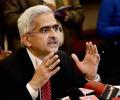
Reserve Bank Governor Shaktikanta Das on Monday said despite the latest headwinds arising from the Jackson Hole summit leading to extreme volatility, our banking system and financial markets are strong enough to withstand such pressures. Taking the markets by surprise, US Fed chair Jerome Powell had told the annual Jackson Hole summit of central bankers and economists last week that he would have to keep raising federal fund rates to tame inflation, which remains the biggest challenge to the world's largest economy. He also warned of the pains that such monetary policy actions would create on growth and jobs.

The G-20 leaders under the chairmanship of Saudi Arabia's King Salman held an extraordinary video conference in which they resolved to use all available policy tools to minimise the economic and social damage from the pandemic that has killed over 21,000 people and infected more than 470,000 globally.

Risk aversion is currently a dominant depressant to economic recovery, points out Shankar Acharya, former chief economic advisor to the Government of India.

Citing the impact of the second wave of the pandemic over the economy and consumer sentiment, Swiss brokerage Credit Suisse has lowered its nominal GDP growth forecast by 150-300 bps to 13-14 per cent, but expects a stronger recovery in the second half as it sees the lockdowns having limited impact on tax collections. Last month, Neelkanth Mishra, the co-head of equity strategy for Credit Suisse Asia Pacific, and India equity strategist, had told PTI that he expected the real GDP to fall to 8.5-9 per cent in FY22 due to the more severe pandemic attack. The virus case load has crossed the 25-million mark, death toll from the same is nearing 2.9 lakh mark, which is one of the highest in the world as the test positivity rate has been around 15 per cent for long.

With automation taking place at a much faster pace across industries especially in the tech space, domestic software firms that employee over 16 million are set to slash headcounts by a massive 3 million by 2022, which will help them save a whopping $100 billion mostly in salaries annually, says a report. The domestic IT sector employs around 16 million, of them around 9 million are employed in low-skilled services and BPO roles, according to Nasscom. Of these 9 million low-skilled services and BPO roles, 30 per cent or around 3 million will be lost by 2022, principally driven by the impact of robot process automation or RPA. Roughly 0.7 million roles are expected to be replaced by RPA alone and the rest due to other technological upgrades and upskilling by the domestic IT players, while it the RPA will have the worst impact in the US with a loss of almost 1 million jobs, according to a Bank of America report on Wednesday.

Had India agreed to join the trade pact, Indian markets would have been flooded with cheap Chinese products.
